
North Devon may sometimes seem to be a sleepy part of the country but it has more than its share of war secrets, and ‘special operations’. Visiting the sites on this trail you can discover how the Torridge Estuary helped ensure the success of the D Day landings. This is part of the Heritage Harbour ‘Transformed by War 1939-1945’ National Trail.
Click on the heading to jump to more details on each area
Link to the google map https://www.google.com/maps/d/u/0/edit?mid=1SMvPm0yabz72-9kIEhdBtnnqQnv_xB4&ll=51.0404065984969%2C-4.198730507574715&z=13
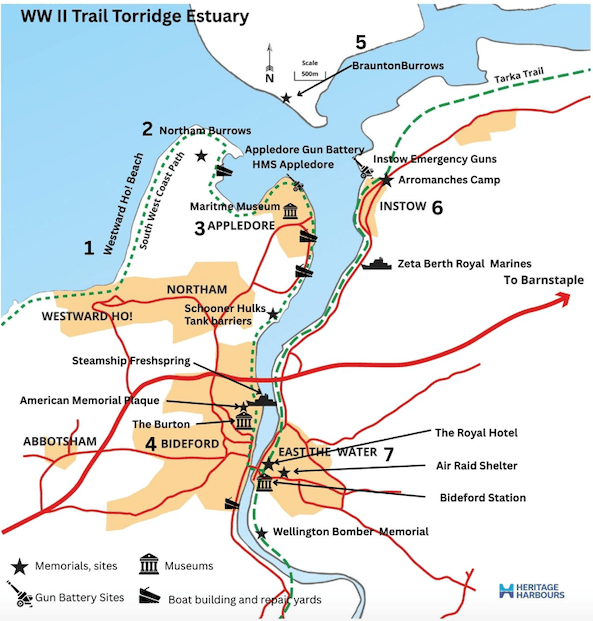
During the dark days of 1940, when invasion was imminent, the Torridge was defended against invasion with gun batteries and barriers against landing craft and troops. Home Guard units patrolled and had hidden bases from which to operate in case of invasion.
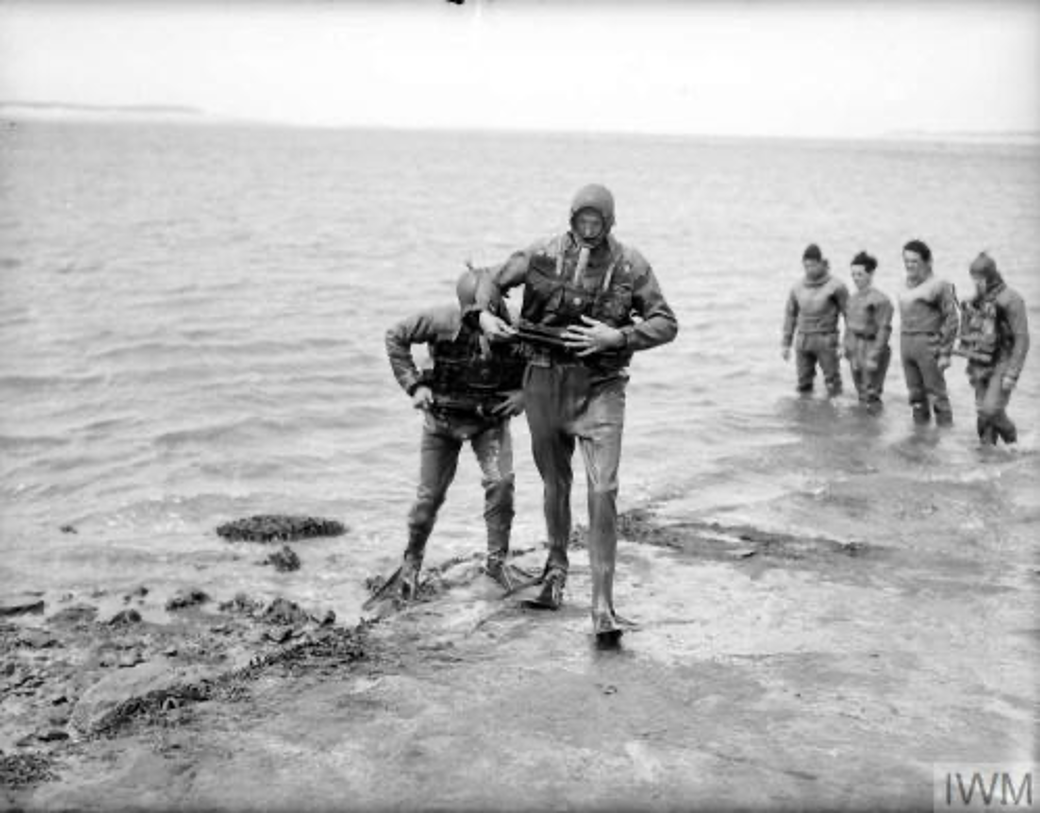
As the tide of war began to change the Torridge Estuary played a major role in preparations for the invasion of Normandy. Local shipyards built wooden Launches, Gun Boats and Torpedo Boats. Experimental stations worked out how to waterproof vehicles, an essential requirement for a successful seaborne landing, and then trained the maintenance teams of the allied armies. Frogmen were recruited and trained to clear underwater obstacles and mines. The American Army set up huge camps and training areas and North Devon beaches were used as training grounds for the invasion of Europe.
Westward Ho! Beach
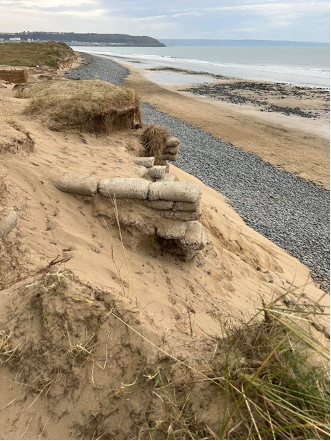
Coastal defences consisting of posts and barbed wire were installed during summer 1940. When the tide moves the sand around the lines of posts are sometimes visible along the length of the beach. Recently (Spring 2025) erosion of the dunes has revealed the remains of hidden foxholes or observation posts formed with sandbags and camouflaged in the dunes. Coastal erosion means these will not be visible for long.
As preparations for the sea borne invasion of Europe came together the beach was used as a testing site, especially for the unusual vehicles like swimming tanks and the great panjandrum.
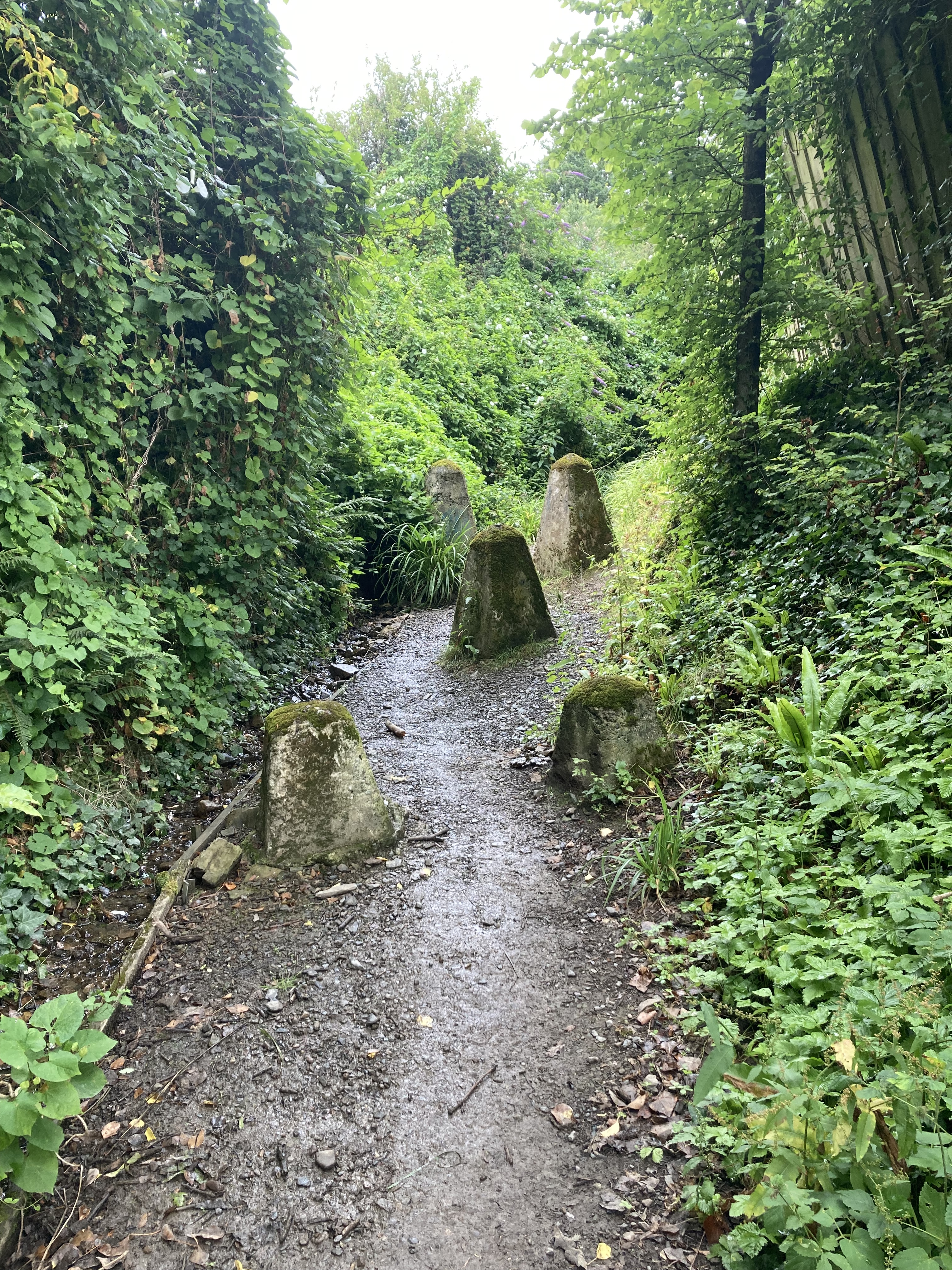
Tank barriers on South West Coast Path : always known locally as dragons teeth, a very concrete reminder of the defences erected in 1940, when the risk of invasion was at its height, still in place on the footpath just north of Cleave.
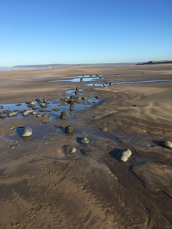
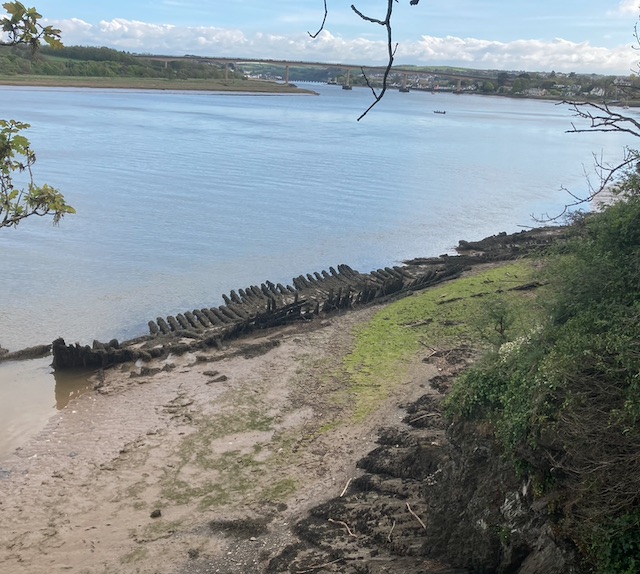
Schooner M.A. James : many wooden schooners were requisitioned for tethering barrage balloons, as defence against aeroplanes, in ports around the UK. The M.A.James was taken to Plymouth and abandoned after the war, her remains are visible from the South West Coast path in the mud at low tide. Take care steep cliffs, soft mud, fast moving tides.
Northam Burrows
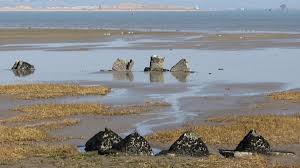
This is the site of RAF Northam Radar Station. In summer 1940 there was rapid construction of coastal defences on the Burrows including ‘dragons teeth’, still visible in the mudflats of the Skern, to prevent access by tanks and landing craft.
By 1943 the military significance changed. The similarity of the landscape with that of Normandy meant this became perfect practice ground for development and testing groundbreaking armoured vehicles that could overcome the formidable German defences anticipated on the beaches of France in the D Day invasion of June 1944.
Under the leadership of Major General Percy Hobart, the 79th Armoured Division developed a series of specialised armoured vehicles, colloquially known as “Hobart’s Funnies.” including:
Crocodile – Churchill tank equipped with flamethrower
Crab – Sherman tank with flails to detonate mines
Bobbin – tank laying a reinforced canvas mat used for vehicles to traverse soft sand
Duplex Drive (DD) Tanks – amphibious tanks that could ‘swim’ ashore
North Devon Maritime Museum Appledore has exhibits about these and some even more unusual experimental weapons
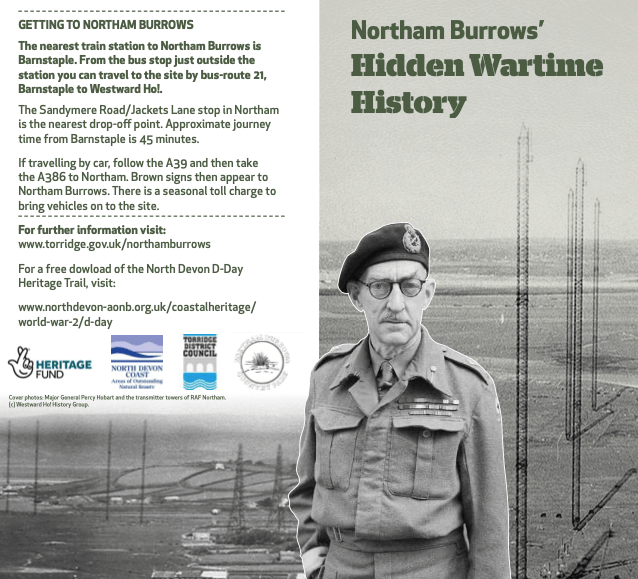
Download a guided walk leaflet to WW II sites on Northam Burrows HERE
Appledore
Work on a new quay wall at Appledore commenced in 1939 and was interrupted by the start of the war. With increased naval activity, especially as a base for developing skills in beach landing and training allied troops, work on the new quay wall and slipways was completed in 1941.
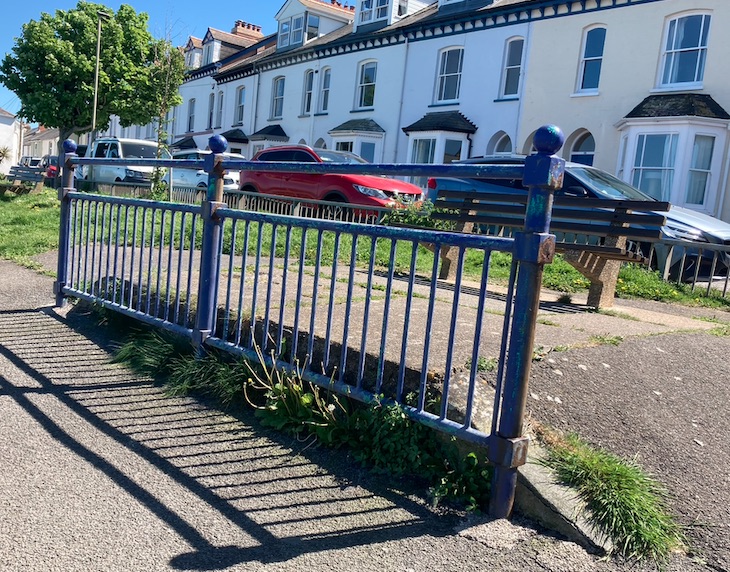
Appledore Gun Battery – Two quick firing 4 inch guns mounted on naval mountings were positioned at the end of Irsha street in Appledore in July 1940. The guns had concrete shelters built around them and were camouflaged to look like the other cottages in the area. They were dismantled in 1945. The original raised concrete bases where the guns were positioned now have benches on them.
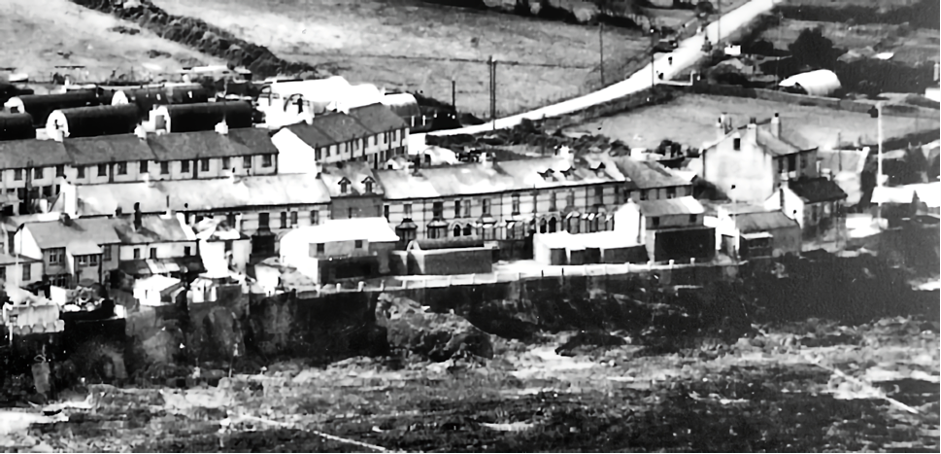
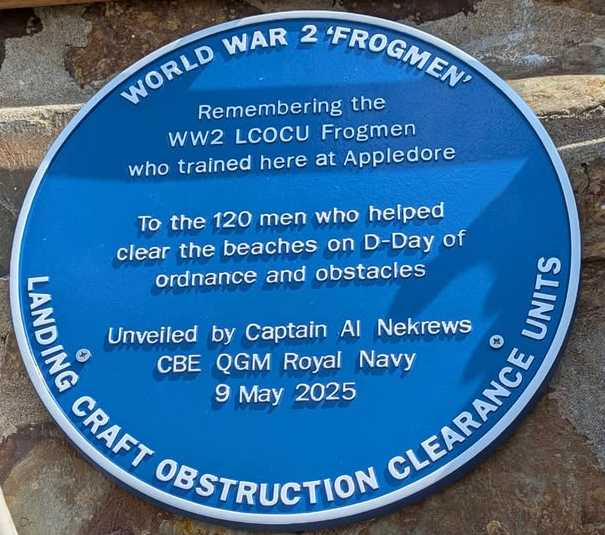
HMS Appledore was a base for development of experimental vehicles. The first men ashore At, ‘Gold’, ‘Sword’ And ‘Juno’ beaches on D-Day were clearance divers – the so-called Frogmen. Their main purpose was to clear mines and underwater obstructions. Recruitment of frogmen began in January 1944 from both the Royal Navy and the Royal Marines. They were stationed at HMS Appledore in top left of the picture. You can’t see the gun battery, it’s camouflaged as a cottage.
North Devon Maritime Museum, Appledore
The North Devon Maritime Museum contains many maritime themed exhibits including displays about the role of North Devon in WW II and especially HMS Appledore, established in 1942, under the auspices of the Combined Operations Experimental Establishment (COXE). This marked a significant strategic shift, turning this coastal community into a key training and research site for developing experimental vehicles and weapons and training the Frogmen. Open April to October.
Bideford
Steamship Freshspring is the last of the 14 ‘Fresh class’ water carriers built in Lytham, Lancashire between 1939 and 1946. Their role was to deliver and replenish water used in the steam turbines of warships. They were also equipped for firefighting. Freshspring, launched after the end of WW II, was built to the same design as all the ‘Fresh Class’ vessels and spent most of her active duty based out of Malta servicing warships in the Mediterranean.

In Bideford since 2016, being restored by the Steamship Freshspring charity, Freshspring is open to the public on Sundays 1100-1600 April to end September. Admission is free, donations welcomed.
American Army in Bideford and American Club
The arrival of American troops in UK was initially shrouded by censorship but the first documented in Bideford was in February 1943 when a GI from Biddeford Maine was interviewed for the local paper. In July that year 72nd Ordnance Battalion, 107th Ordnance Medium Maintenance Company and 33rd Ordnance Bomb Disposal Unit established a camp ‘Bideford Ordnance Experimental Station Depot 0-617’, usually known as Bowden or Handy Cross Camp, on Clovelly Road (near today’s Blights Garage).
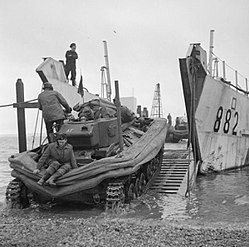
The depot carried out experimental waterproofing of vehicles and testing took place on Westward Ho! beach. There was also a large vehicle repair site at today’s Newton Road – the thick concrete pad laid in 1942 is still in evidence beneath houses and gardens.
Many of the servicemen in the area were technical specialists: mechanics, welders, and perhaps surprisingly a number of Hollywood film cameramen. Once waterproofing techniques had been mastered in the 7 months between 8 December 1943 and 8 July 1944, during the build-up to D Day, over 3,500 American servicemen were trained here.
As the number of American servicemen in Bideford increased the American Red Cross opened an American Club in a converted private house, Upover, near Chudleigh Fort. It had a games room, lounge and snack bar serving Coca Cola and familiar food from home.
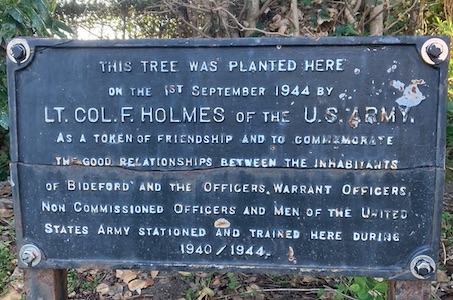
Plaque in Victoria Park: This tree was planted here on the 1st September 1944 by Lt. Col. F. Holmes of the U.S. ARMY as a token of friendship and to commemorate the good relationships between the inhabitants of Bideford and the officers, warrant officers, non commissioned officers and men of the United States Army stationed and trained here during 1940/1944.
The Burton at Bideford
The Burton at Bideford is a free-to-access art gallery and museum, which houses a Craft Gallery, shop, a French bistro café and Bideford’s tourist information centre. The downstairs galleries exhibit artists from all across Devon, the UK and the world, and the upstairs galleries tell the tales of Bideford’s long history in the global pottery industry, the historical ties between Bideford and the Americas, the importance of the geologically unique earth pigment Bideford Black, the town’s ties to the last witch trial in England and the historical links with the river and railways. Open Tuesday to Sunday all year.
Braunton Burrows
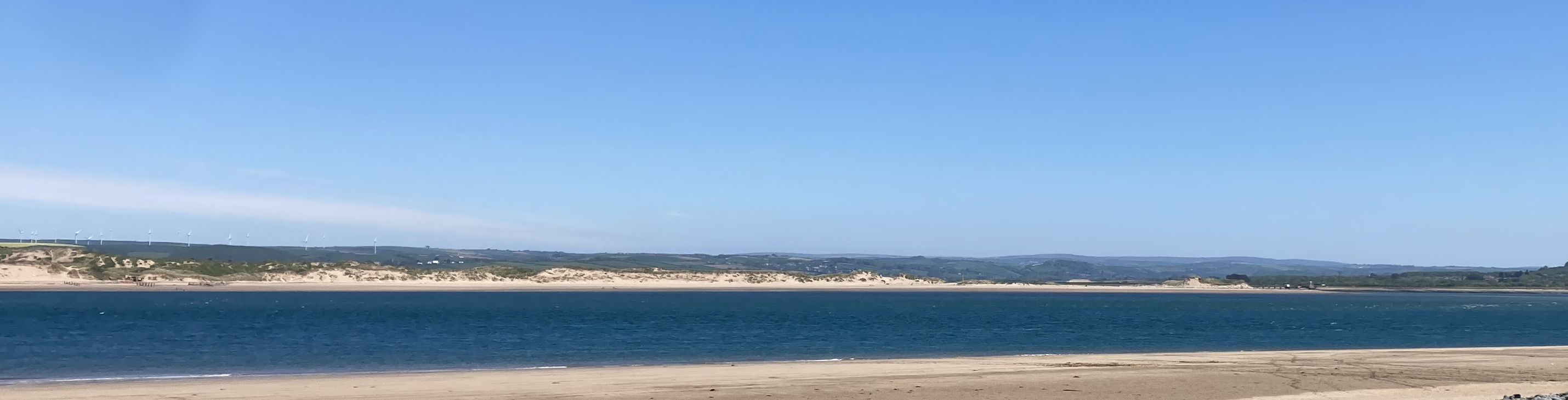
In the rolling sand dunes of North Devon, Braunton Burrows was the staging ground for one of the most important military transformations of the Second World War. In 1943, the US Army established its Assault Training Centre (ATC) here, turning the vast coastal expanse into a full-scale rehearsal space for amphibious warfare. The strong currents and large tidal range in the Torridge Estuary were ideal for landing craft to practice the navigation skills needed for successful beach landings. In addition there were:
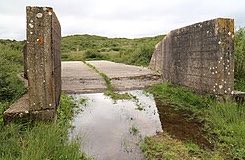
- Concrete replica landing craft: life-sized landing craft were constructed with realistic features such as lowered ramps, scaffold frames, and canvas or corrugated sheeting to simulate combat conditions.
- Mock German pillboxes and fortified emplacements: built to be destroyed in exercises. As replacements were needed quickly, engineers developed solid concrete blocks with painted or sculpted embrasures to simulate defensive structures.
- Live-fire ranges: weapons training, from rifle and machine gun practice to simulated demolitions. Soldiers trained to breach obstacles, cross open ground under fire, and neutralise enemy positions.
- Simulated cliff assaults at Baggy Point: vertical landings were rehearsed using ropes and ladders to scale the sea-facing cliffs, essential preparation for unexpected terrain and inland defences on D-Day.
After the war, Braunton Burrows remained partially under the stewardship of the Ministry of Defence. Though many structures were demolished in the 1960s and 70s, concrete landing craft remnants are still visible in the southern dunes. Interpretive trails and plaques guide visitors through the history of the Assault Training Centre and walks and educational tours led by the Friends of the Assault Training Centre occur throughout the summer months. Braunton and District Museum.
Instow
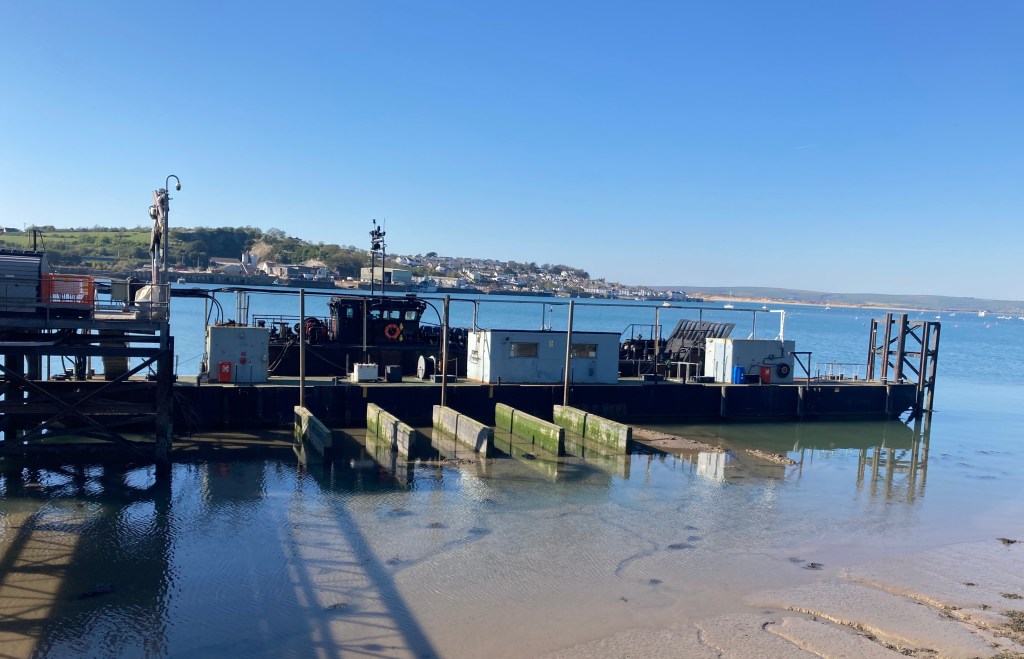
Arromanches Camp and Zeta Wharf Royal Marines : this is an out station of 1 Assault Group Royal Marines (1AGRM). It was built in late 1942 as a training and testing facility for troops preparing for the invasion of Europe.
Now, it is responsible for developing new equipment for the Royal Marines. In a two-mile radius of Instow, there is easy access to sheltered and open water but also five of the seven beach types found worldwide – making it an excellent place to test and develop new kit. Arromanches is the town on Gold Beach, Normandy, that was the site of the Mulberry Harbour.
During the war Instow beach was closed to the public and small landing craft were often beached on the sand to dry out or for repairs after training exercises at Braunton Burrows. The building, known today as The Boathouse, was then Jubilee Hall and used as a NAAFI (Navy, Army, and Air Force Institutes) canteen between 1943 and 1944.
Other properties and locations in Instow commandeered for military purposes were: the Village Hall that became a canteen for sailors and Strandfield House, today the Commodore Hotel, that was commandeered for naval officers. North Devon Yacht Club was turned into their private club. A former US ferry boat, MV President Warfield was towed across the Atlantic from Baltimore and moored off Westleigh as a floating barracks for 300 US Navy officers and other ranks.
Film of a Valentine DD disembarking from landing craft LCT 340 making its way ashore during sea trials in 1943. The Duplex Drive (DD) ‘swimming’ tanks were amphibious tanks fitted with a canvas flotation screen to give the tank enough buoyancy to support its weight without having to sacrifice armour or firepower. The duplex drive engine powered propellers in water and tracks on land.
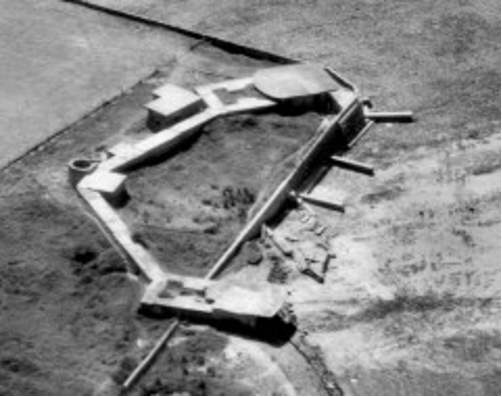
A gun battery was built at Instow Cricket Club and, together with the Appledore Gun Battery, defended the mouth of the estuary. Aerial photographs show the complex of buildings flanked by the sea wall. The buildings were mostly removed in the late 1960s. Instow Emergency Battery in 1960. NMR RAF/543/1017 PSFO-0182 SS4731/6 10-AUG-1960. English Heritage (RAF Photography)
East the Water
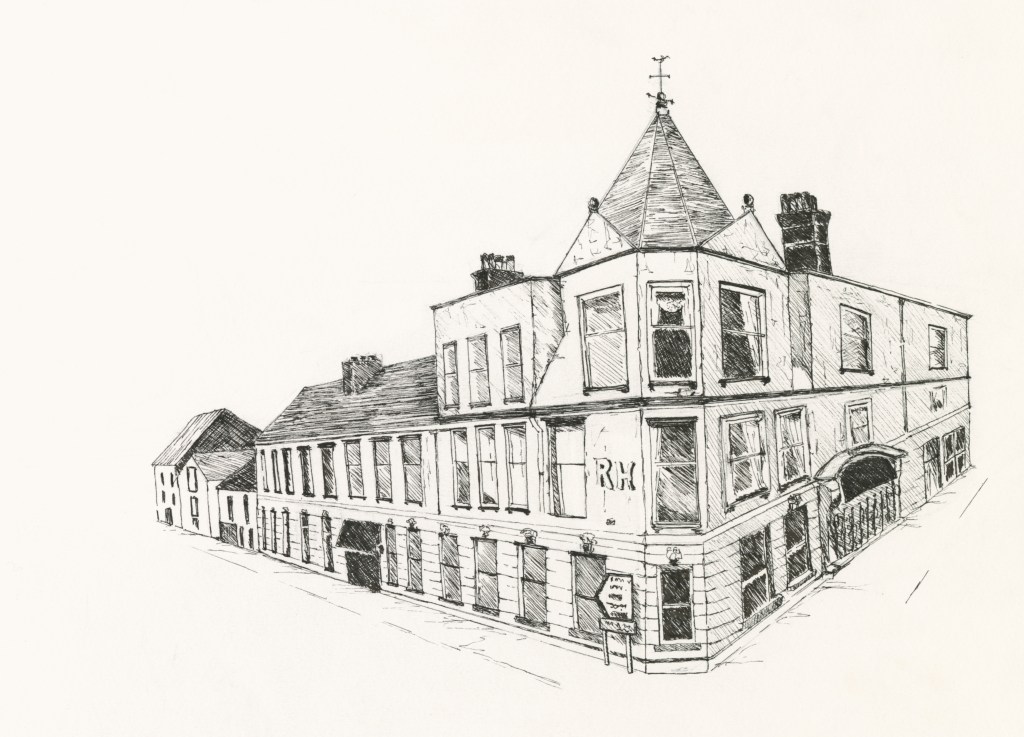
Royal Hotel : During WW II this historic Grade 1 listed hotel remained open and put up many senior officers and VIPs. Their ‘Green Room’ was reserved for secret discussions.
A plaque in the bar, presented by Colonel Commandant of Combined Operation Experimental Establishment Westward Ho! (COXE), thanks the hotel and its staff. An unnamed general is said to have recalled ‘more secrets have been discussed in this room than in probably any other hotel in the country’.
A local story recalls how one evening at Bideford Cinema, after the programme had finished, the projectionist was taken into the projection room by two MPs (Military Police) and after loading the film was blindfolded until the film finished. Winston Churchill and General Dwight Eisenhower were in the audience to watch films of the trials of secret vehicles and invasion plans. Churchill’s favourite railway carriage, used to travel to the West Country, is now restored and preserved at South Devon Railway, Buckfastleigh.
Railway Station (Bideford Railway Heritage Centre): an important communication link for people and goods. In 1940 Bideford & Barnstaple had made arrangements to receive 1,500 children evacuated from London starting on the 16th June. Over the next four days evacuees arrived in North Devon from; Streatham, Croydon, Wimbledon, and Ipswich. Film of evacuees arriving at Bideford
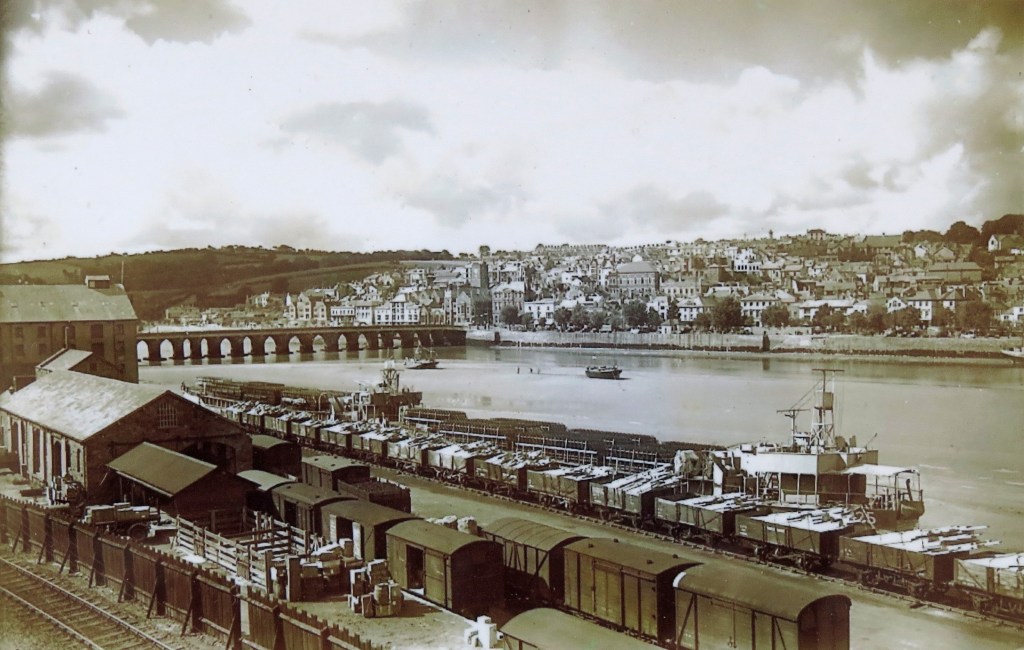
The railway freight yard on Railway Wharf at East the Water (now Ethelwynne Brown Close) was an important logistics point for goods coming into and out of Bideford and the Torridge area. In March 1944 a convoy of 8 landing craft were pictured at Railway Wharf en route from Scotland to Dartmouth in preparation for D-Day.
Along the Tarka Trail between Jewsons and Kynoch’s Local Nature Reserve and Industrial Area (once a WW I factory for production of acetone, an essential component of cordite used in manufacturing shells) the American Army established an ammunition dump as part of D-Day preparations – large concrete slabs are visible on the roadway and adjacent land.
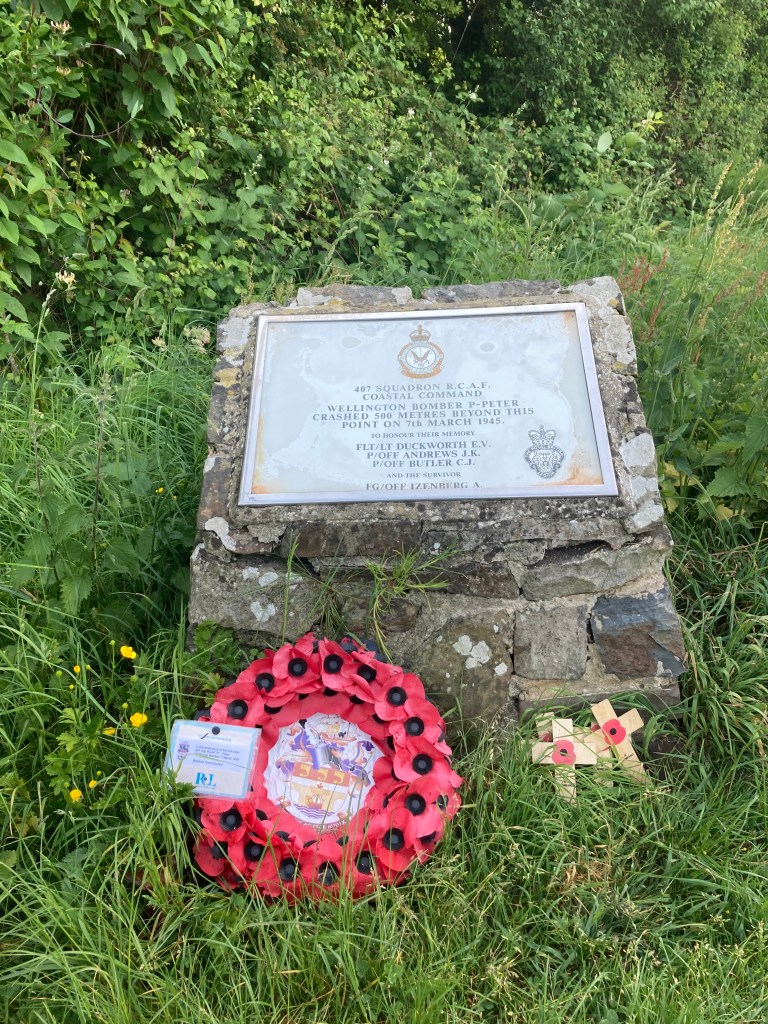
Wellington Bomber crash site memorial : on the 7 March 1945, a Wellington aircraft from 407 Canadian squadron at RAF Chivenor, near Barnstaple, crashed at Round Hill, East the Water, after engine failure, 4 minutes after take-off on a training flight. It clipped a building 60 feet up on the east bank of the Torridge and just missed the Gas Works.
Sadly, the crash claimed the lives of 3 Canadian airmen, Ernest Verdon Duckworth, John Kerr Andrews and Cyril Joseph Butler. They are all buried at Brookwood Cemetery, Surrey. Miraculously there was one survivor Abe Izenberg, he later married Josephine Jewell of Barnstaple, granddaughter of the ex-mayor. They got engaged 3 weeks after the accident and were married in June. Bravery awards were earned by local men Walter Johns and Alfred Paddon for their help with the rescue
Ship Building and Repair
At the start of WW II the Torridge was a centre for the remaining fleet of wooden coastal schooners still trading around the UK. Local shipbuilders had retained the skills needed for the repair and construction of wooden vessels. The development of magnetic mines meant that wooden vessels were once again important. During WW II Torridge shipyards were employed on construction and repair work for the Admiralty.
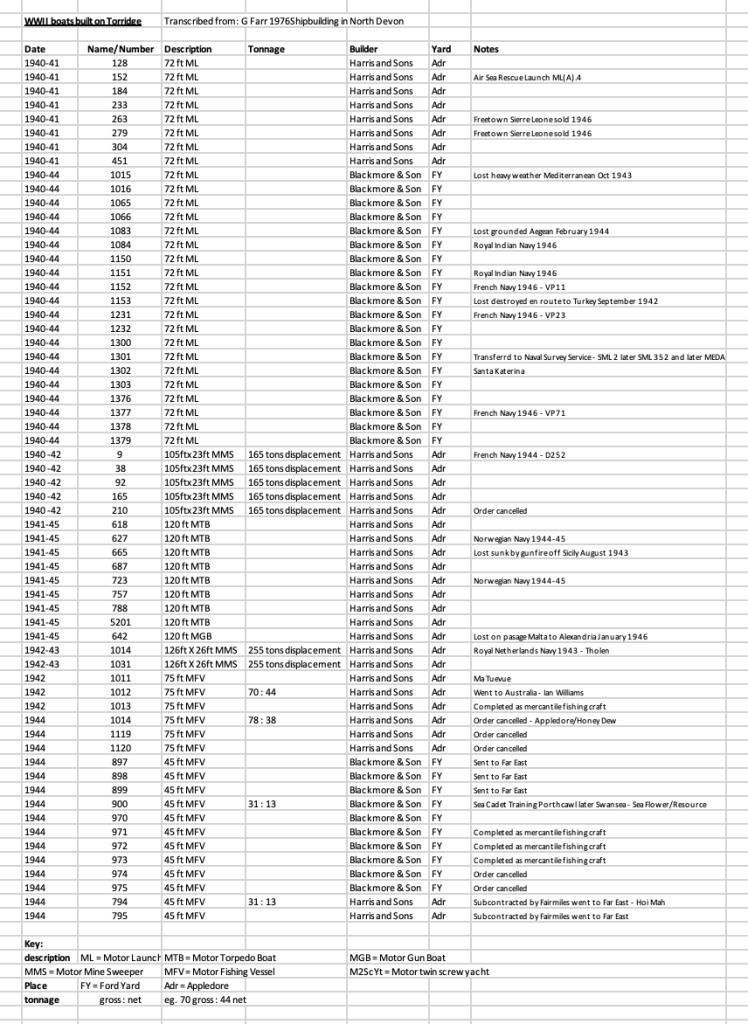
The yards of P.K. Harris in Appledore and M. W. Blackmore and Sons at Bideford secured orders for the Navy’s ‘maids of all work’ somewhat confusingly known as Motor Fishing Vessels (MFV) as well as Motor Minesweepers (MMS), Motor Gun Boats (MGB), Motor Torpedo Boats (MTB), and Motor Launches (ML). These later often deployed as Harbour Defence Launches or Seaward Defence Motor Launches. A list of vessels constructed on the Torridge 1939-1945 is available. Other yards such as Hinks and Waters were building smaller craft such as ship’s boats.
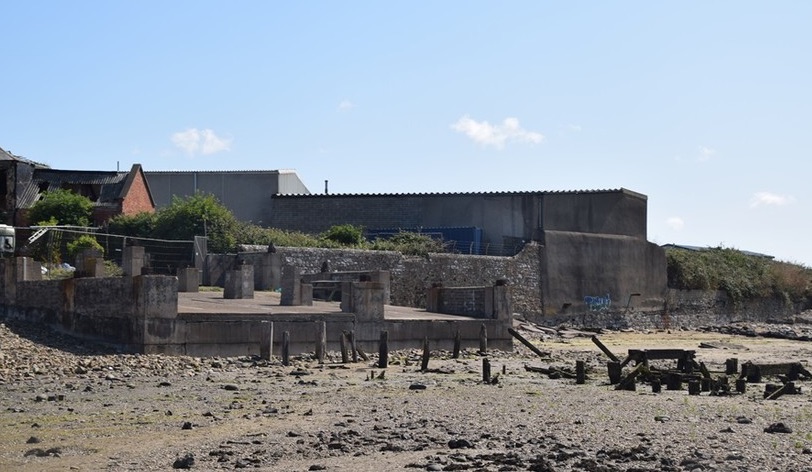
On the South West Coast path at Watertown, between Appledore and Northam Burrows, the remains of the slipways for Hink’s yard still extend into the estuary. They moved to this site in 1967, prior to that being based from a yard in Irsha Street.
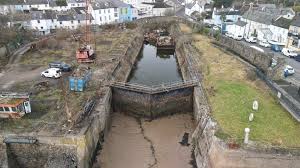
In Appledore Richmond Dock, originally built in 1856 by William Yeo, was part of the Richmond Yard where P.K. Harris were based from 1932 -1960. Information panels on the railings describe the history of the dock and shipbuilding.
Just downstream from the Navantia shipyard and New Quay is Middle Dock (sometimes referred to as Benson’s Yard). A new Clean Maritime Innovation Centre, to research and develop green propulsion methods for ships, is being built here. In WW II P.K.Harris used this site for building launches.
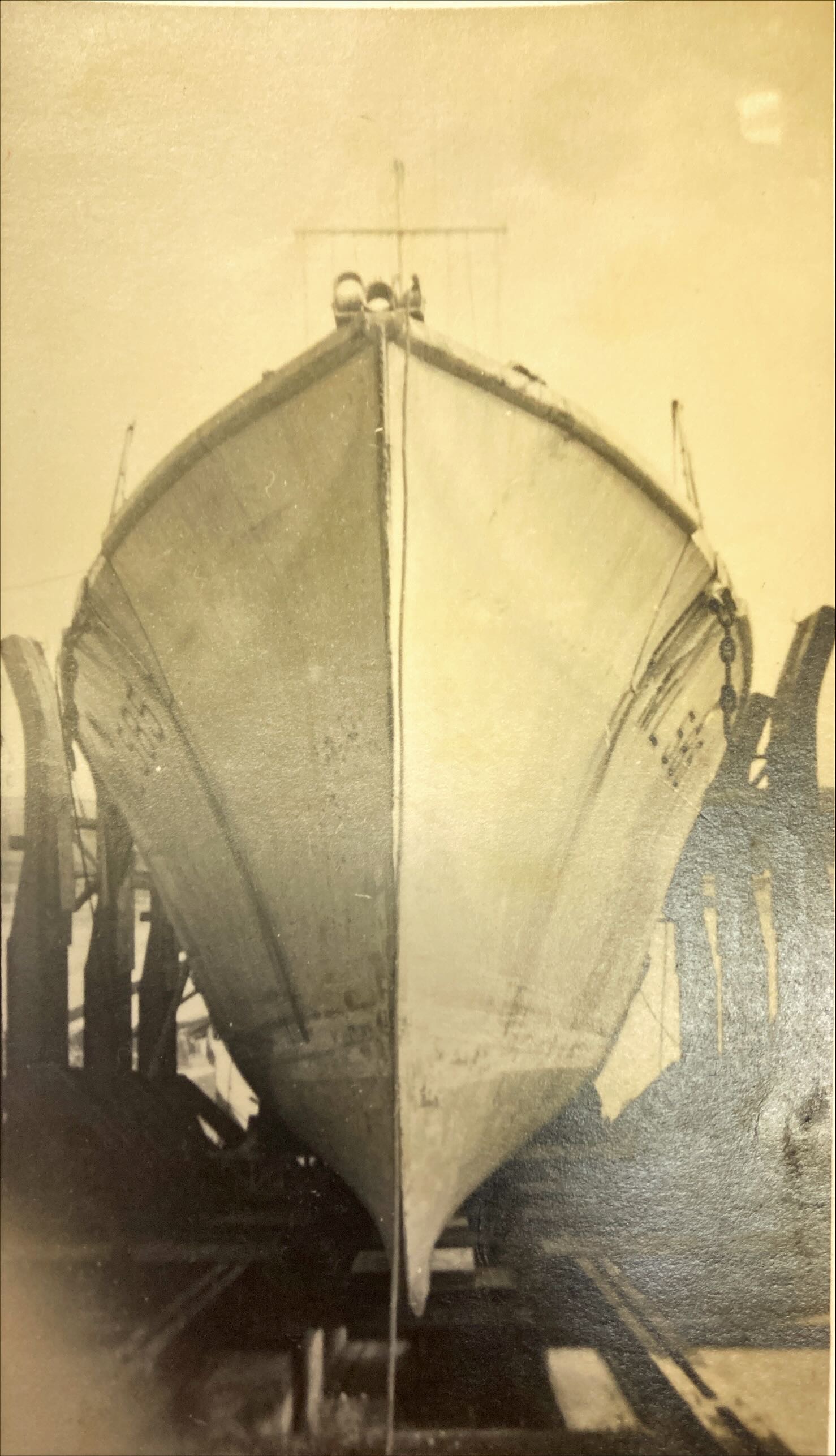
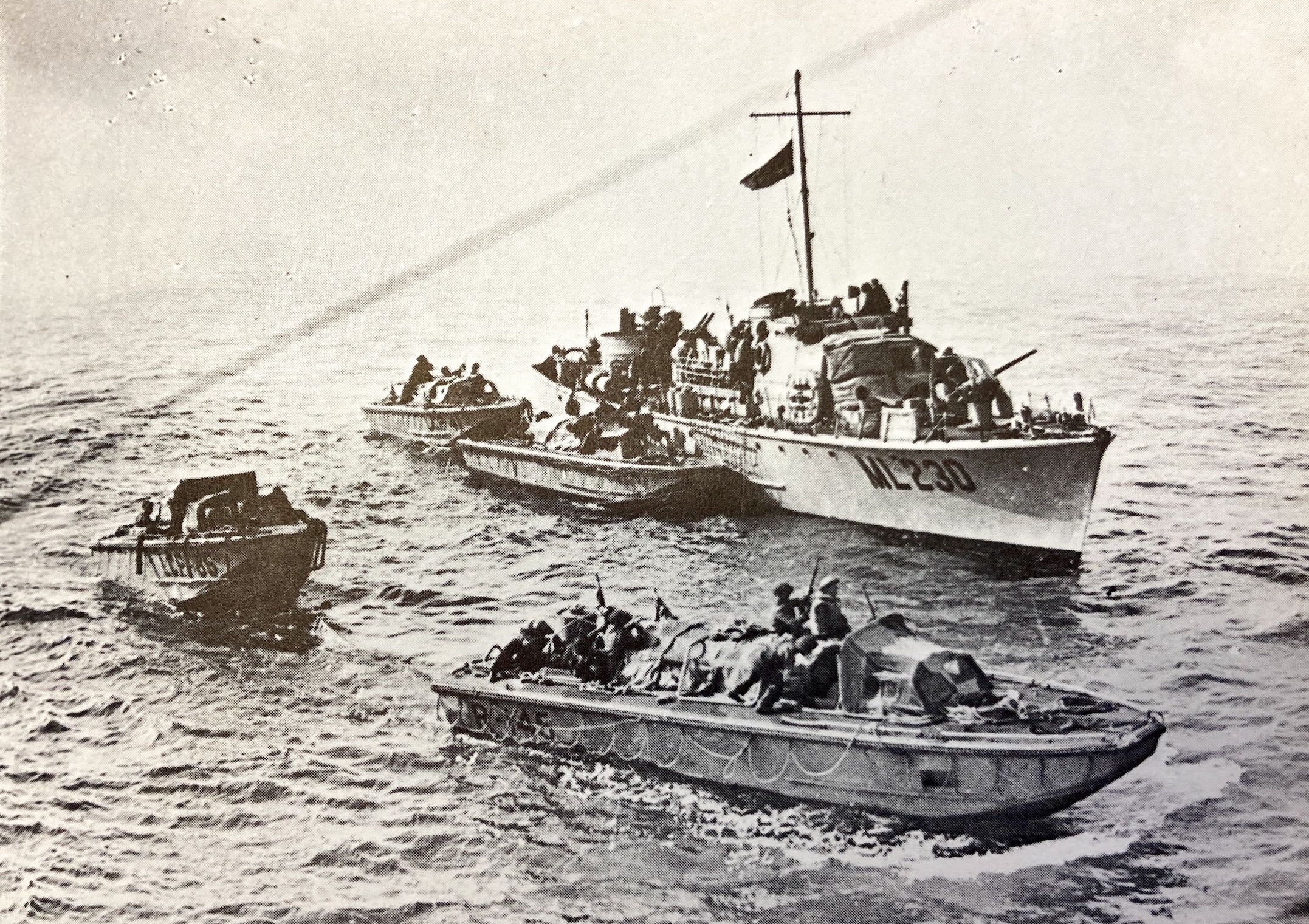
Images show: Motor Launch ML 585 (P.K. Harris), Landing Craft LCP(L)s with Motor Launch (ML) escort, Admiral Franklin with Fred Harris on deck of Motor Torpedo Boat (MTB) November 1942, ML at P.K. Harris New Quay Yard, Appledore. Images courtesy North Devon Maritime Museum.
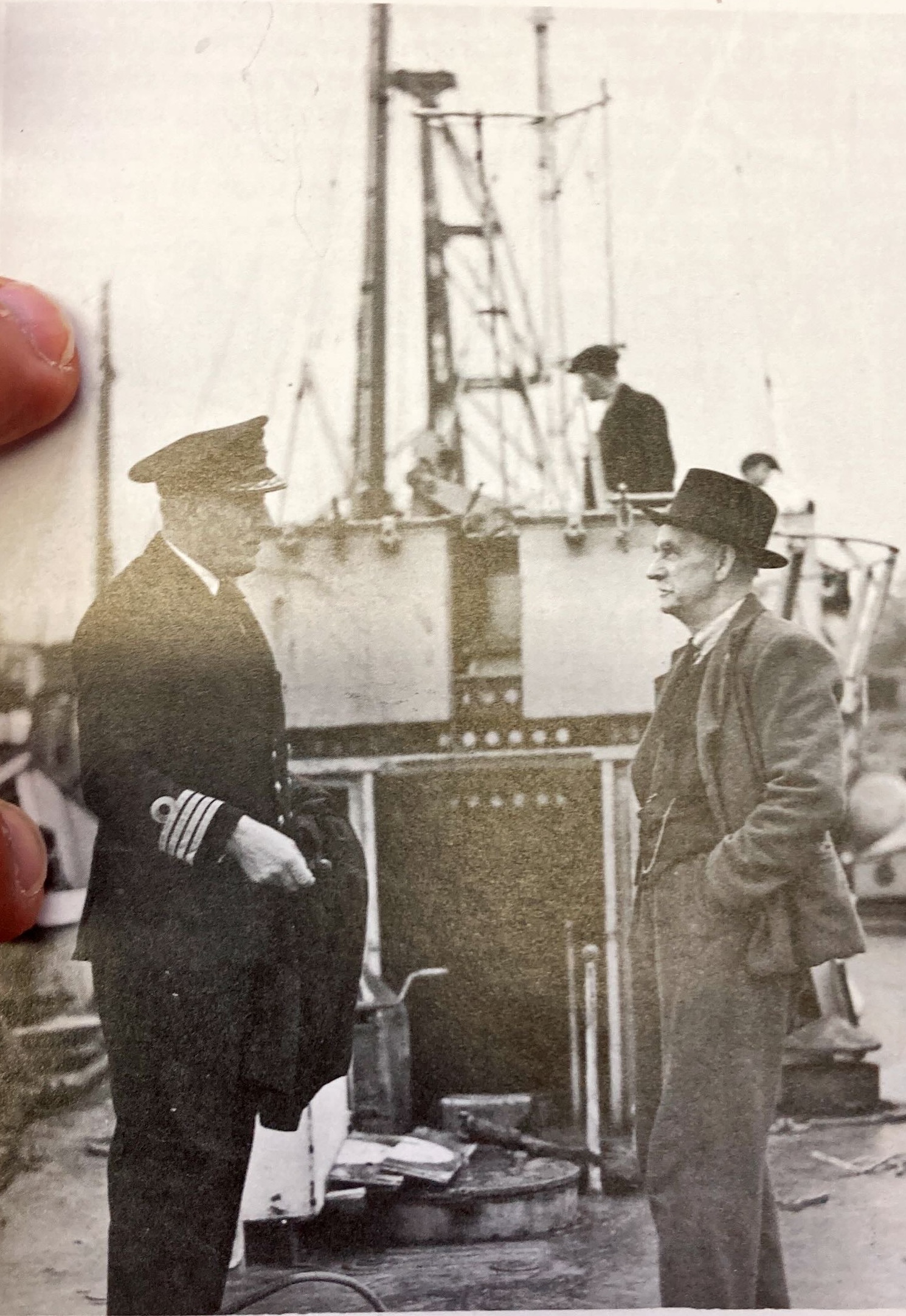
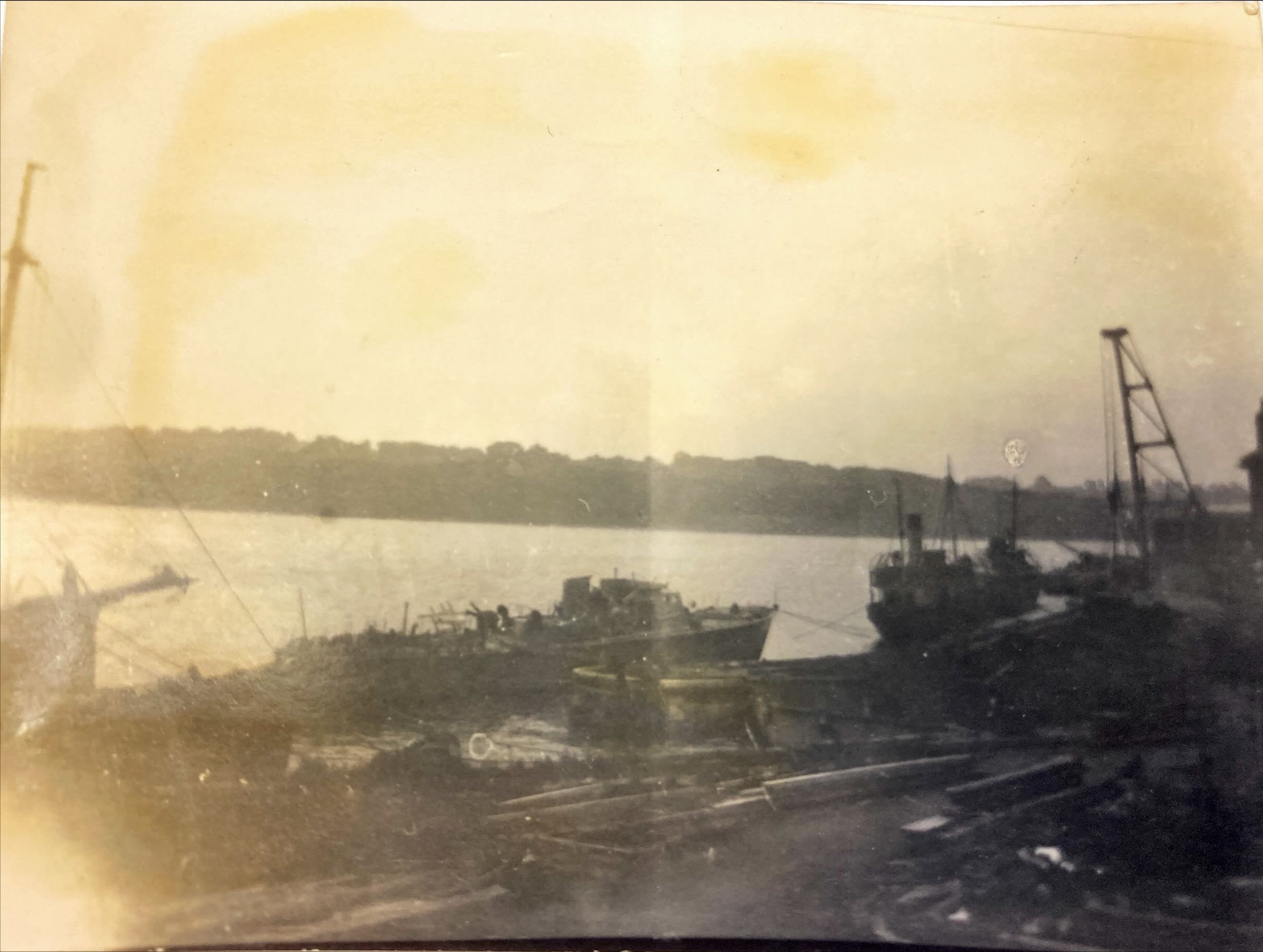
Film ‘The Little Ships of England’ includes footage of wooden ships being built in Devon (British Film Council)
List of WW II Torridge Built Vessels: a total of 62 vessels were ordered from the P. K. Harris and M. W. Blackmore and Sons yards between 1940 and 1945 (source Farr 1976)
Home Front
The population of Bideford was 8,778 at the 1931 census. By 1942 it had swollen to 12,000 mainly as a result of evacuees. Their numbers peaked in the early years of the war, after the bombing of Plymouth and again in 1944 when V1 rockets targeted south east England.
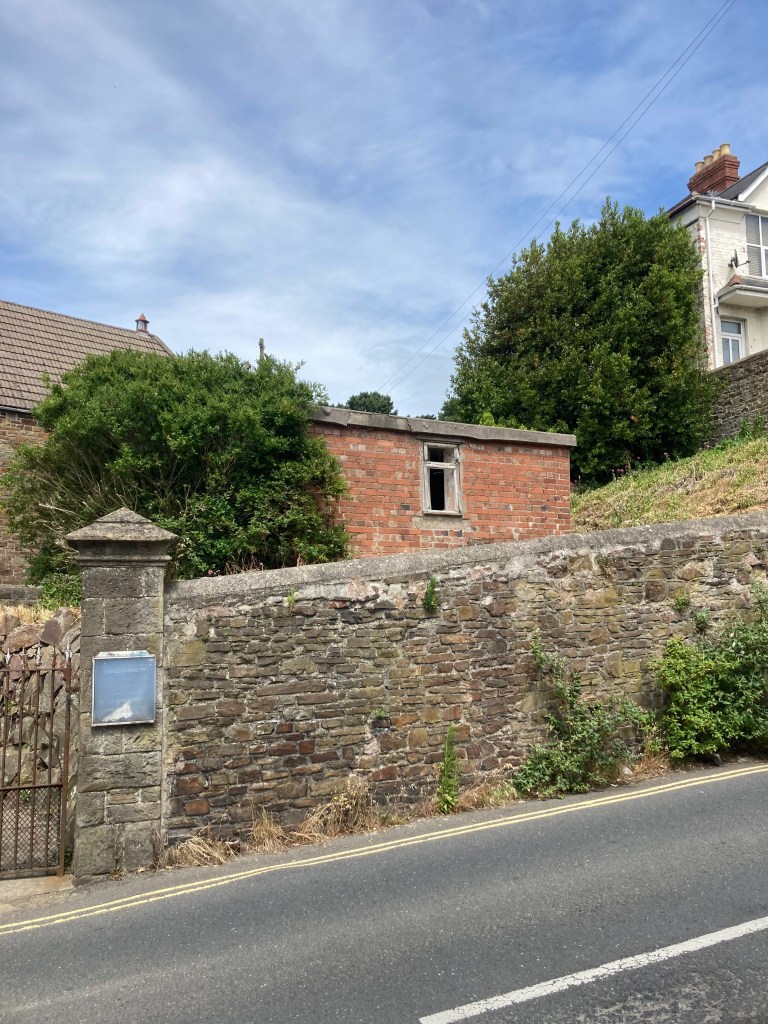
Preparations for protecting the civilian population from bombing raids included precautions against the risk of air raids. Air Raid Wardens policed the blackout and public air raid shelters were constructed – the only one remaining being in St Peter’s Churchyard, East the Water. The window needless to say is a more recent addition.
Home Guard and Auxiliary Units : 5th (Bideford) Battalion, Devon Home Guard was formed in May 1940 and affiliated to the Devonshire Regiment whose cap badge they wore. It was made up of platoons of men in reserved occupations and those too old or young to serve in the armed services. They wore army style uniform and were equipped with a few rifles.
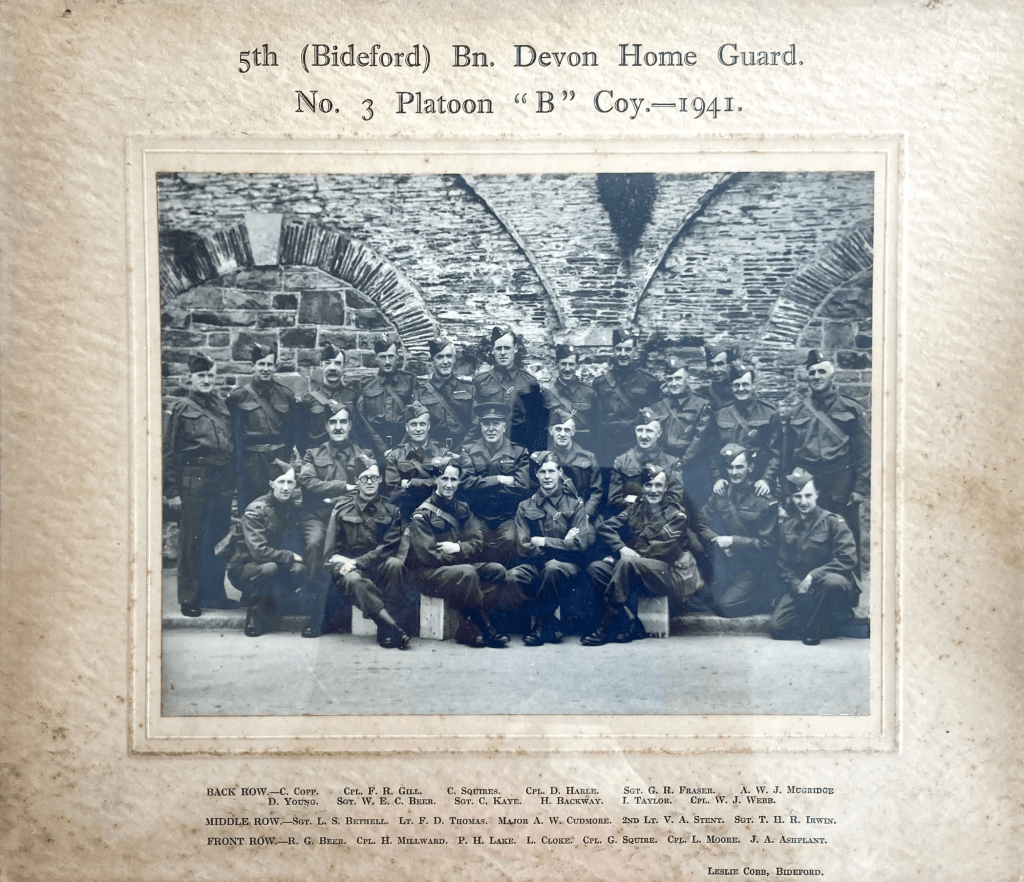
Original photograph in Pannier Pantry, Bridgeland Street, Bideford with thanks for permission to use
The Auxiliary Units were a secret resistance network of highly trained volunteers prepared to be Britain’s last-ditch line of defence during World War Two. They operated in a network of cells from hidden underground bases around the UK. There were three Operational Bases and a bomb store used by Bideford Patrol. It is not known if all OBs were in use at the same time or if each was discarded after being compromised and a new location sought.
Shipping : in addition to military traffic and the construction and repair of vessels in shipyards along the estuary, commercial cargoes continued to arrive and leave from the estuary. Every able ship in the coaster fleet was pressed into service and west coast ports got more traffic to avoid the high risk of submarine and E Boat attacks along the east coast. Unserviceable or old wooden vessels were requisitioned to tether barrage balloons in ports and estuaries.
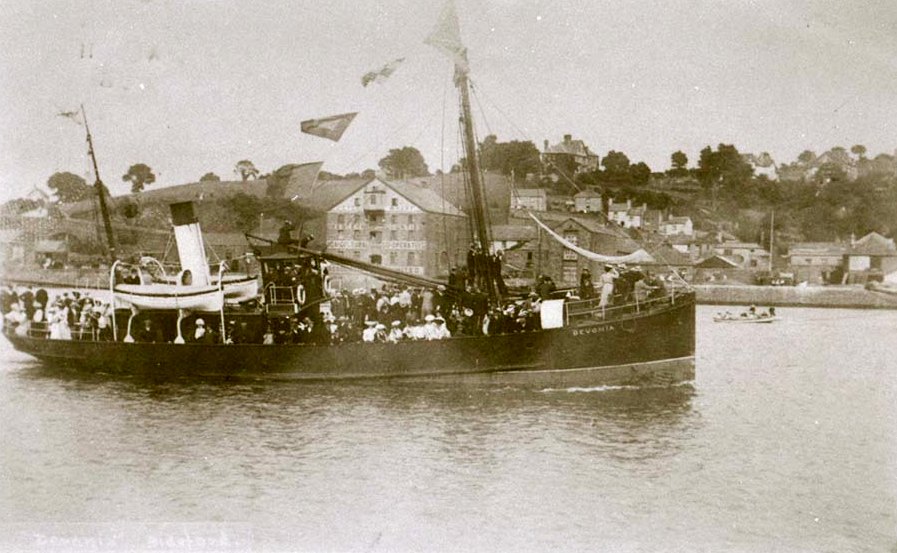
The steamer Devonia, based from Brunswick Wharf, East the Water, was one of these vessels and an early casualty of the war. Devonia, owned after 1938 by A. J. Smith Ltd of Bristol, was a coasting steamer transporting cargoes as varied as coal from South Wales, cattle from Lundy and in the summer tourists on sixpenny excursions down the river and ‘Over Bideford Bar’. The Devonia sank off Barry, South Wales in October 1940 when she struck a mine. There was one survivor, William Turner from East the Water.
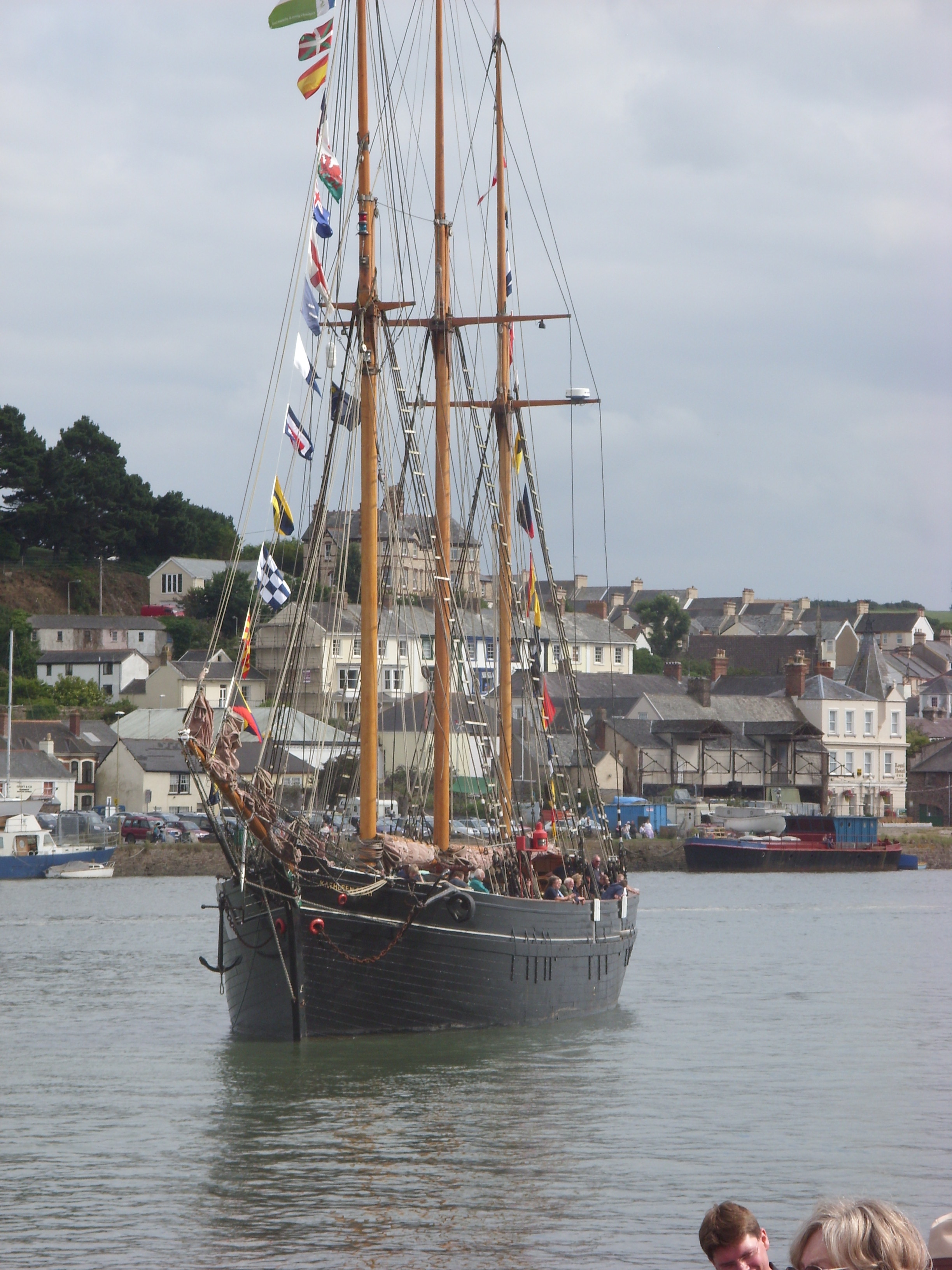
The Bideford registered schooner Kathleen & May was purchased by Captain Tommy Jewel of Appledore in the 1930s when she was refitted and a 80 bhp Beardmore engine was installed. Working in the coal trade, mainly to Ireland, in 1943, armed with a Lewis Gun and a rifle, she made her first voyage with clay from Fremington to Carrigaline Pottery in Co. Cork, Ireland – a trade in which she became well known. She is currently (2025) moored in Gloucester.
VE Day : Victory was officially confirmed on May 7th. Two days before news arrived that German forces in the Netherlands had surrendered and a Dutch ship, alongside at Bideford Quay, was decked out in all the flags it possessed.
The next day a huge display of flags went up all around the town and at 3pm crowds gathered by the Town Hall to listen to the Prime Minister announcing Germany’s surrender broadcast by loudspeakers. There was a short speech from the mayor followed by peal of bells from St Mary’s church, then the Home Guard band began playing on the Quay and the fun became fast and furious and as night descended there was singing, dancing, impromptu floodlighting and fireworks. The following day there were at least 30 street parties and fleets of naval craft, now no longer so secret, gave children and their mothers rides along the river.
After six years of bloody war the towns and villages along the Torridge had escaped invasion and bombing. They became the temporary home for thousands of refugees and for servicemen from all over the world who were planning and preparing for the largest and most complex maritime invasion the world had ever seen.
Further Reading and Links
All the sites are on this trail are connected by the South West Footpath and Tarka Trail. Some sites on this trail are only accessible on foot. The Tarka Trail has a good surface for bikes and pedestrians. Some parts of the South West Path between Bideford and Appledore have steps and slopes and can be muddy, especialy after rain. A passenger ferry during summer and at high tide only connects Appledore and Instow.
WW II Trail Torridge Estuary Brochure – downloadable here
Devon D Day Booklet Downloadable
Bideford in The Second World War Peter Christie 2021 Christie Publishing available from Walter Henry’s bookshop Bideford and other outlets.
A Two Hundred Year History of Appledore Shipyards Len Harris 1992 Hargill Partners Facsimile Edition Downloadable from Devon Family History Society
North Devon At War Facebook Page
From Quiet Shores to Allied Stronghold: North Devon’s Crucial Role in D-Day – MOLA Coasts in Mind 2025
Jane Hannah MacDonald III was the last rowed lifeboat stationed at Appledore (1910-1922), credited with saving 23 lives. She then went on to be a Dunkirk ‘Little Ship’ and is currently being restored in Bideford. If you want to know more about this restoration or arrange a visit please contact Appledore Maritime Heritage Trust.
HMS Bideford – a Shoreham class sloop built in Devonport Dockyard, launched in 1931, was named after the town and served as an escort and patrol vessel before, during and after WWII. In 1940 she sailed to Dunkirk to take part in the rescue of stranded soldiers, where she was struck by a German bomb with the loss of 16 crew and 12 passengers. Despite being temporarily grounded as a result, she continued rescuing dozens of troops, and was towed back to Dover. After being repaired she returned to her role as an escort vessel. She was eventually broken up at Pembroke Dock in 1950.
“Heritage Harbours – Transformed by war” National Trail Exhibition
Bideford and River Torridge Heritage Harbour together with North Devon Maritime Museum, Appledore, The Burton at Bideford and MOLA Coasts in Mind
Way of the Wharves CIO Charity 1188912
May 2025 80th Anniversary of D Day
 Bideford and River Torridge Heritage Harbour